


When someone asks ChatGPT, Gemini, Perplexity, or Claude for a plumber, a dentist, or a coffee shop nearby, the AI doesn’t guess. It pulls from a specific set of signals scattered across your Google Business Profile, your website, and the review platforms where your customers talk about you. Some businesses show up in that answer consistently. Most don’t.
A recent analysis tracked 6,299 local campaigns and ran 31,495 prompts across the four major AI engines to see what separates the businesses that get cited from the businesses that get skipped. The pattern held up across industries: it isn’t one big trick, it’s ten specific, fixable factors.
Here’s what moved the needle, in order.
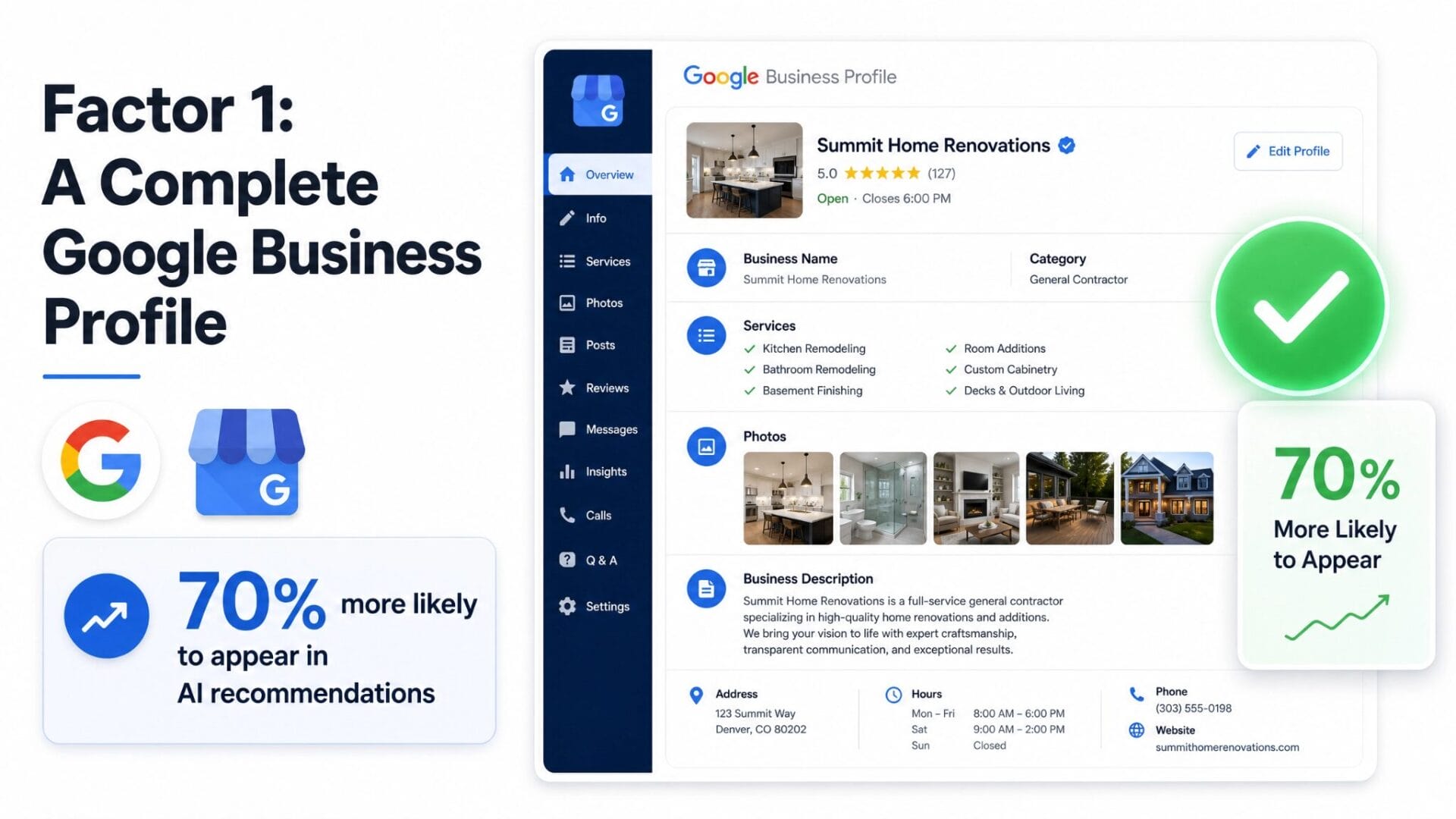
Factor 1: A Complete Google Business Profile
Businesses with a fully filled-out Google Business Profile — categories, services, hours, photos, description — were 70% more likely to appear in AI recommendations than businesses with a bare-bones listing. AI assistants lean on the Business Profile as their primary source of truth, and an incomplete profile reads to the algorithm the same way it reads to a customer: unfinished.
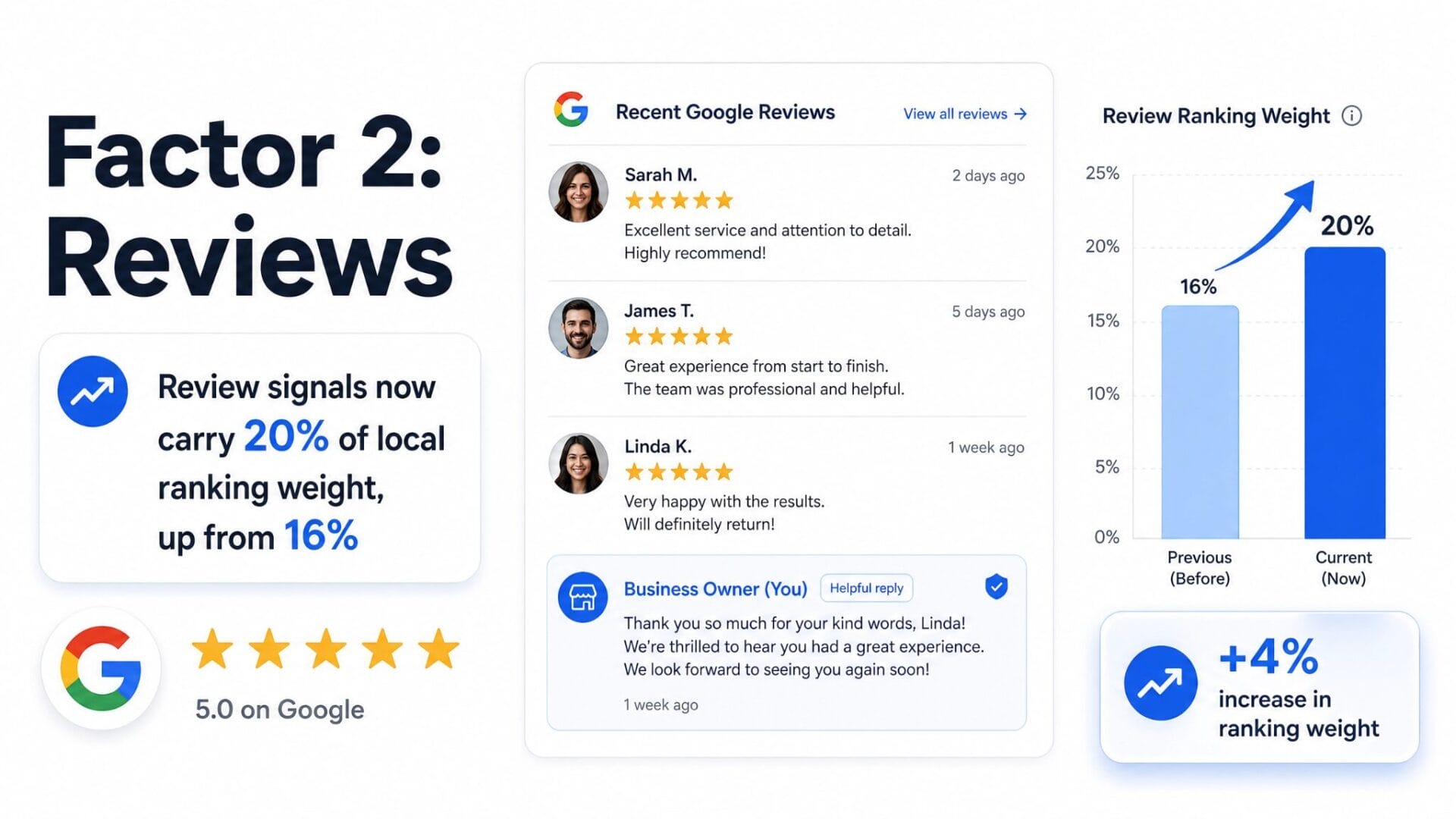
Factor 2: Reviews
Review signals now account for 20% of local ranking weight, up from 16% a year ago. That’s not just star rating — it’s review volume, recency, and whether the business responds. AI assistants increasingly quote review content directly when explaining why they recommended a business.
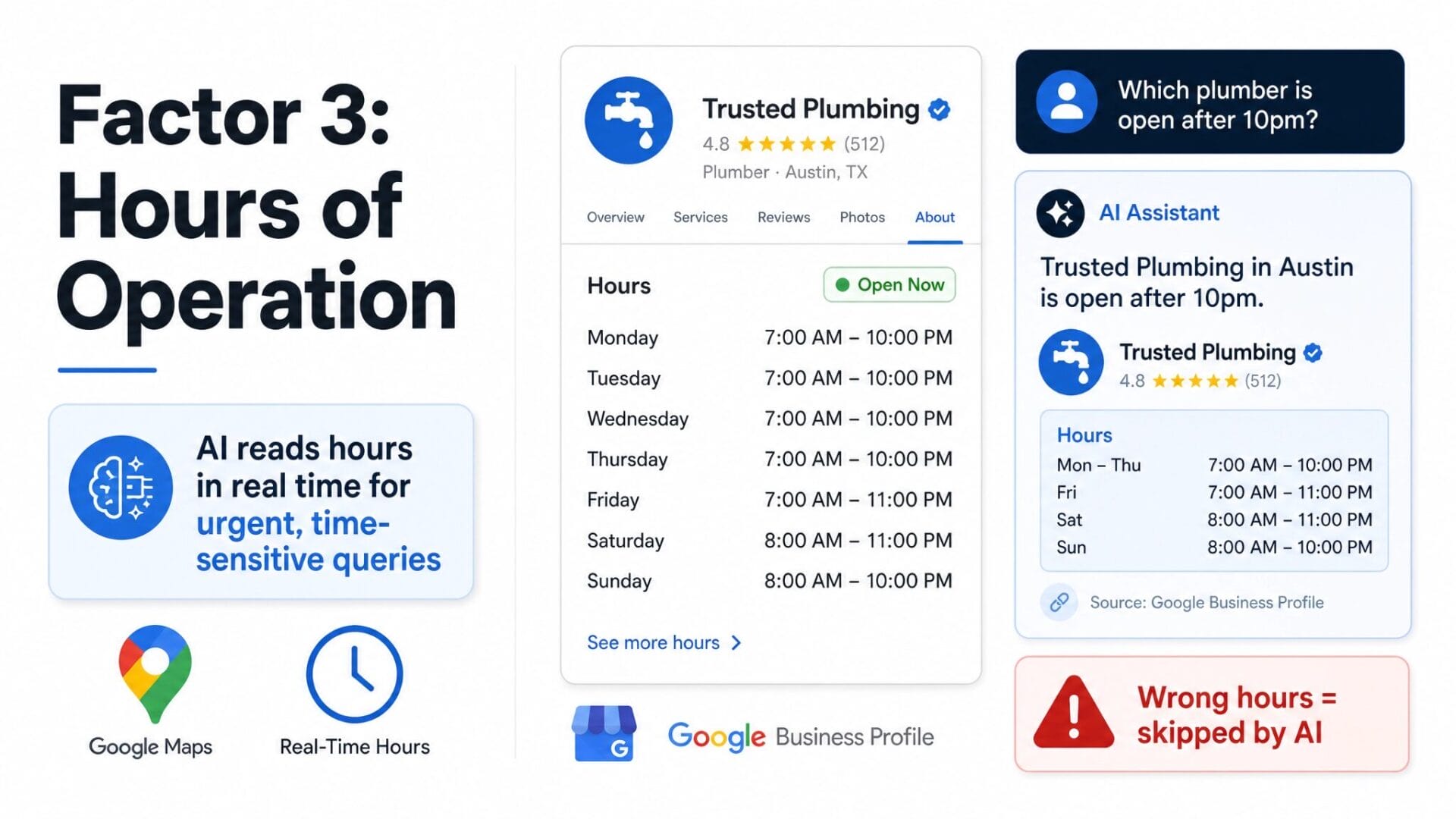
Factor 3: Hours of Operation
AI assistants read business hours in real time, especially for urgent, time-sensitive queries like “who’s open after 10pm.” If your listed hours are wrong or out of date, the AI doesn’t flag the error — it simply skips your business and recommends the next one whose hours check out.
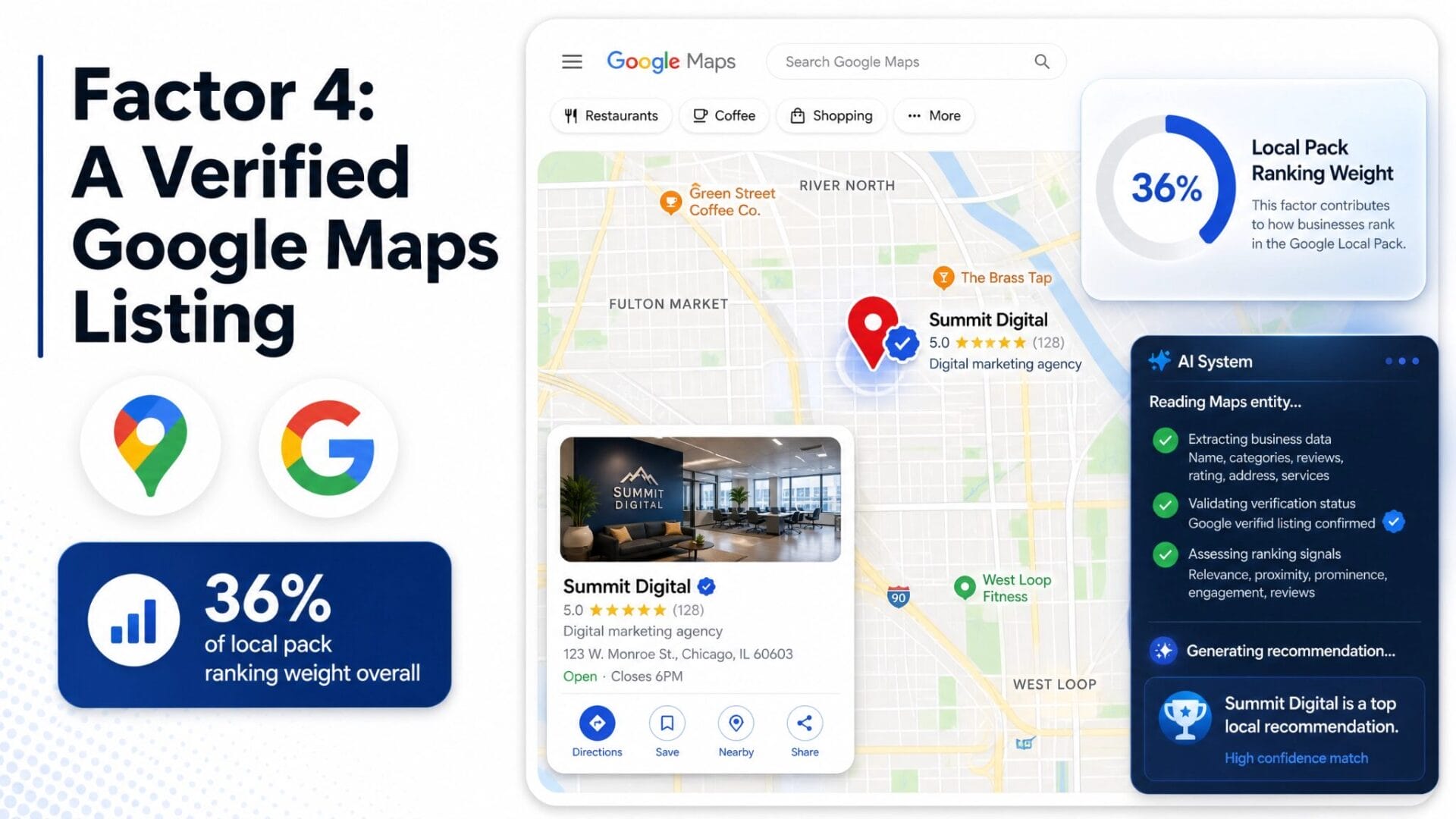
Factor 4: A Verified Google Maps Listing
A verified Maps listing carries 36% of local pack ranking weight overall — the single largest factor in this list. Verification isn’t optional at this point; it’s the foundation everything else in your local presence sits on top of.
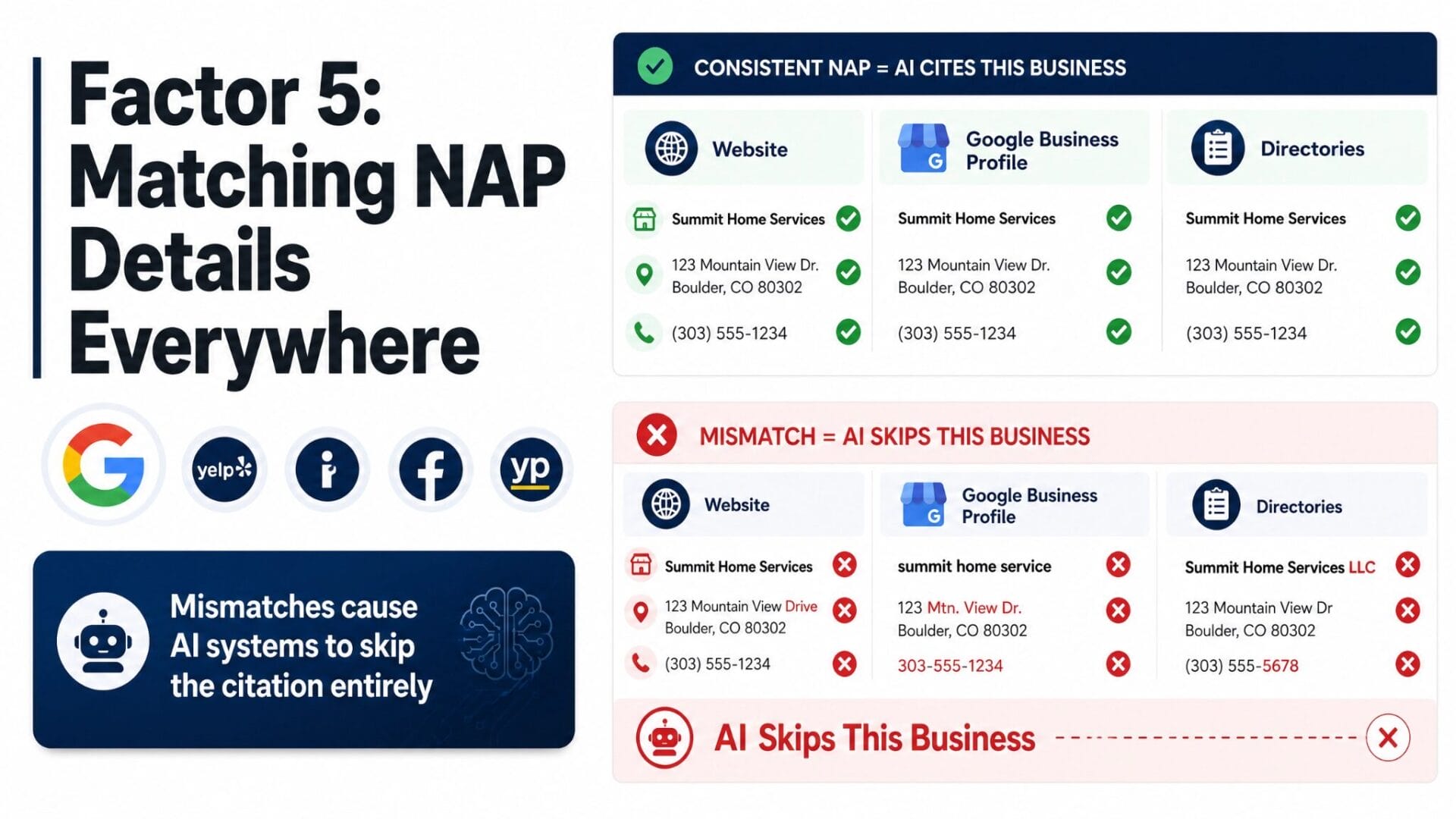
Factor 5: Matching NAP Details Everywhere
NAP stands for Name, Address, Phone — and it needs to match exactly across your website, your Google Business Profile, and every directory you’re listed in. A mismatch as small as “Dr.” vs. “Drive” or one wrong digit in a phone number is enough for AI systems to skip the citation entirely rather than risk sending someone bad information.
Factor 6: On-Page Titles and Schema Markup
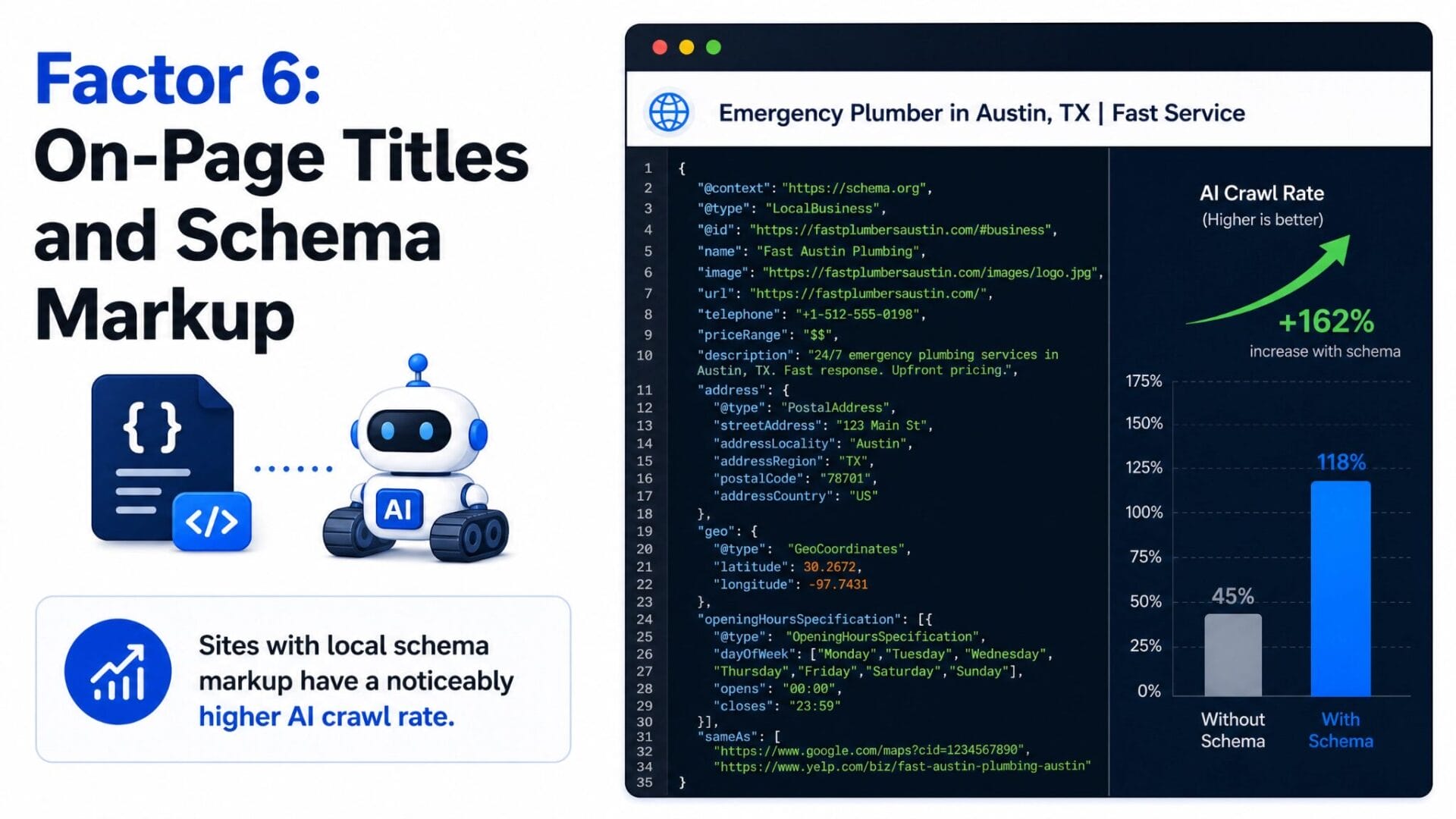
Sites with local business schema markup saw a 162% increase in AI crawl rate compared to sites without it. Schema is structured code that tells search engines and AI crawlers exactly what your business is, where it’s located, and what it offers — without it, the AI has to guess from unstructured text, and it often guesses wrong or skips the page.
Factor 7: Coverage Across Many Phrasings
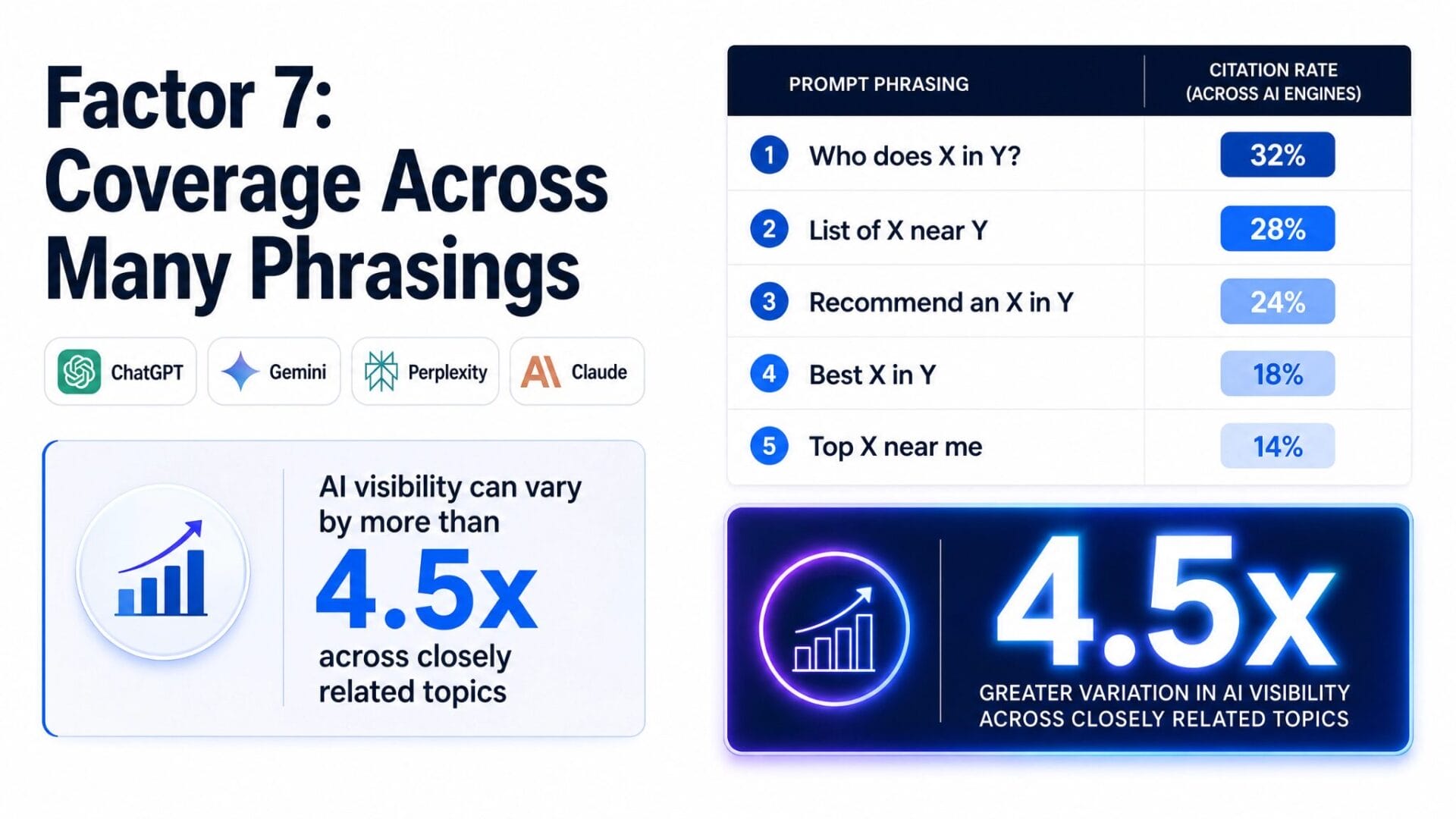
AI visibility varied by more than 4.5x across closely related search phrasings for the same business. “Best plumber near me” and “who does emergency plumbing nearby” can return completely different results, even though a customer would consider them the same question. Businesses that showed up consistently were the ones whose content — website, GBP posts, FAQs — naturally covered multiple ways of asking the same thing, rather than optimizing for a single exact phrase.
Factor 8: Time and Profile Maturity
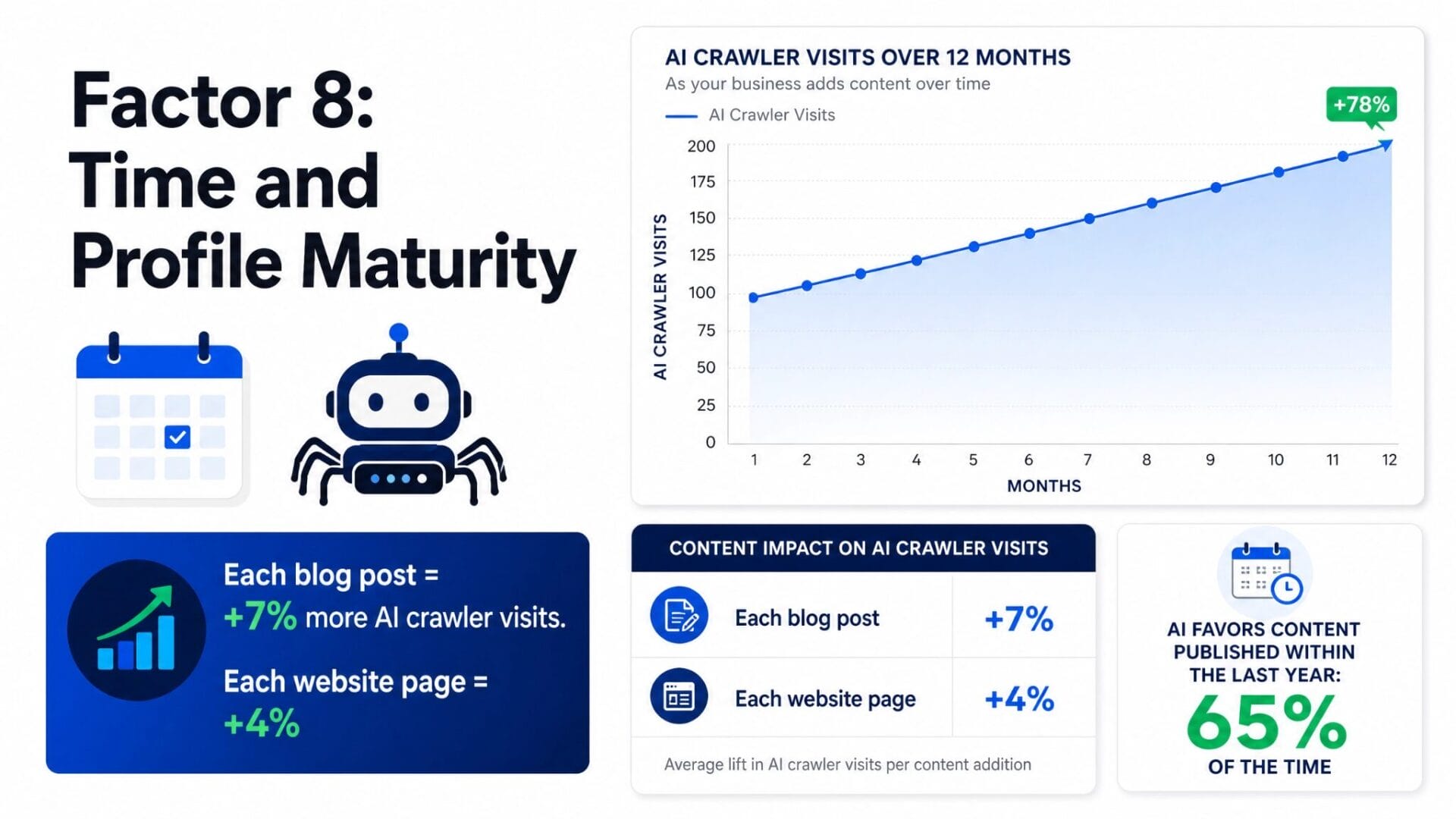
Fresh content matters more than most businesses assume: each new blog post correlated with a 7% lift in AI crawler visits, and each new website page added roughly 4%. AI engines favor content published within the last year 65% of the time. A profile that hasn’t been touched in two years signals a business that may not still be reliable.
Factor 9: Brand Mentions Beat Backlinks
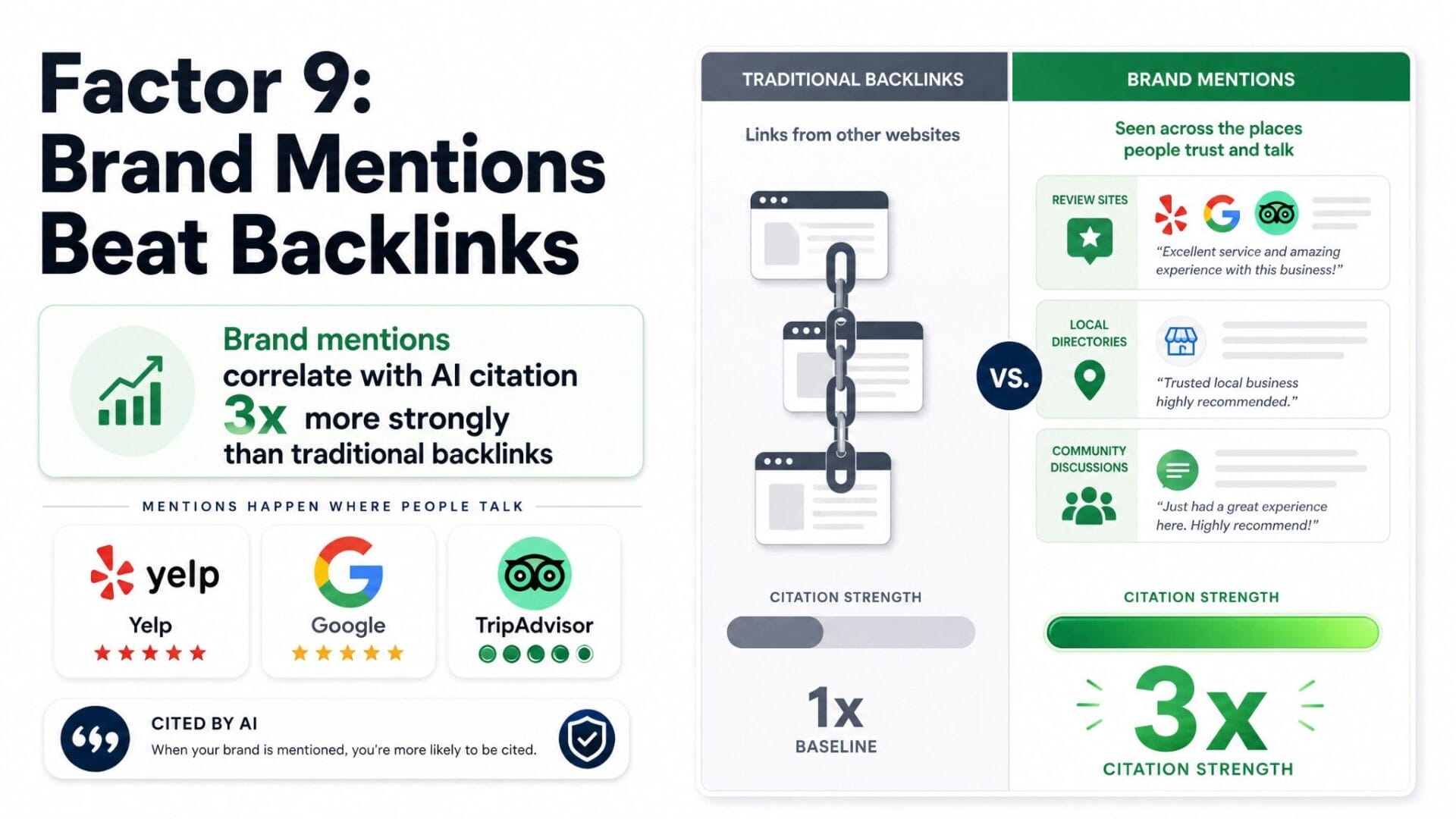
Traditional SEO has trained businesses to chase backlinks. But for AI citation specifically, brand mentions — on review sites, in local directories, in community discussions — correlated with citation 3 times more strongly than traditional backlinks did. AI models weigh “how often is this business talked about, by name, in places people trust” more heavily than “how many websites link to this one.”
Factor 10: Answer-First Content
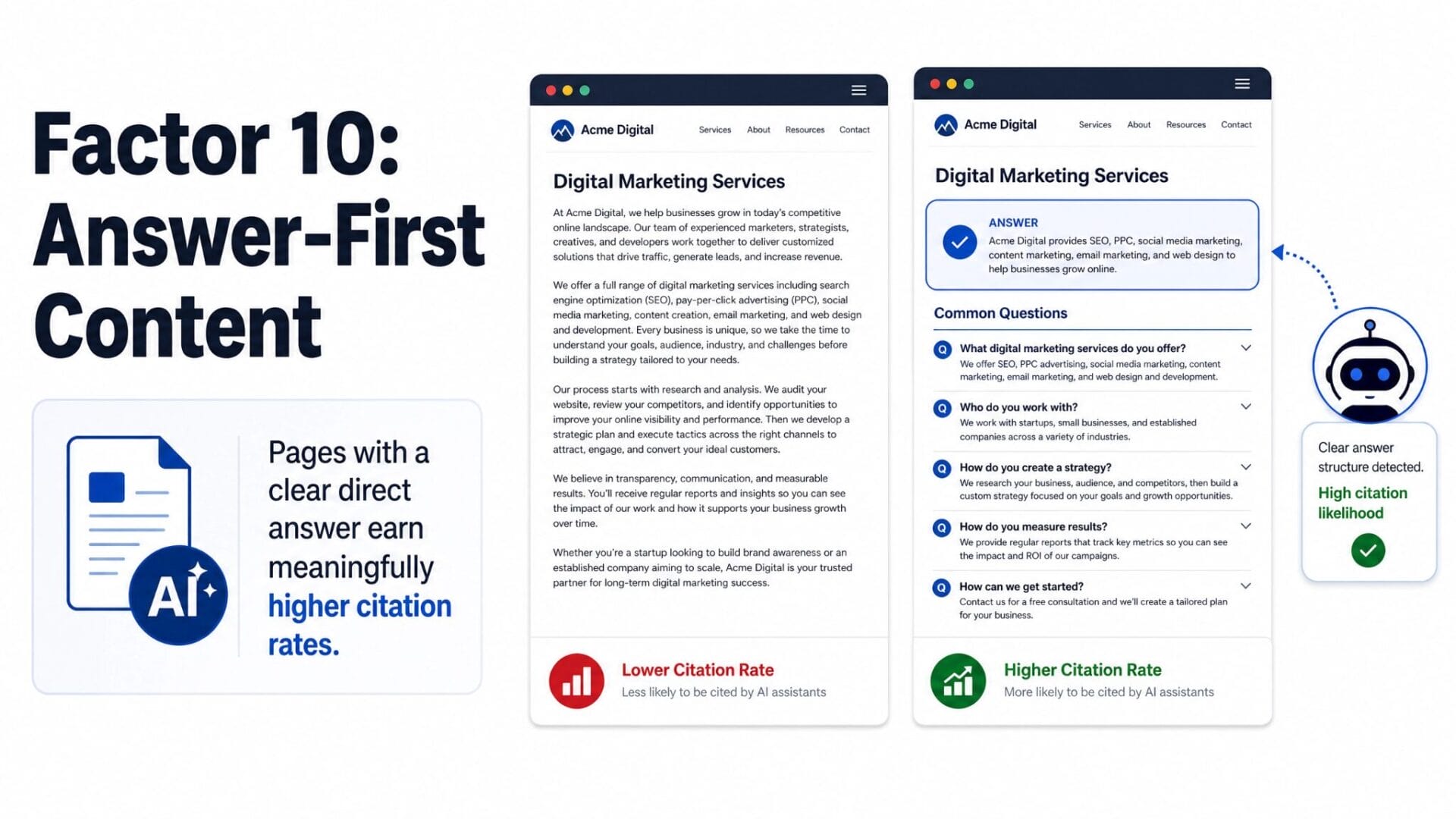
Pages structured to answer a question directly and immediately — rather than making the reader dig through paragraphs of company history first — earned meaningfully higher citation rates. AI assistants are built to extract clear answers; a page that hands one over gets pulled into the response, and a page that buries it doesn’t.
What This Means For Your Business
None of these ten factors require a redesign or a big budget. They require consistency: a complete profile, matching contact details everywhere you’re listed, review responses, fresh content, and pages that answer questions plainly. Businesses that handle all ten well aren’t outspending their competitors — they’re just not leaving gaps for AI to skip over.
Want a closer look at where your own listings stand on these ten factors? Get in touch for a free profile review.


