


Two recent changes to Google’s tools are worth knowing about if you manage a local business’s online presence, and they’re both moving in the same direction: Google is casting a wider net for information about your business, and giving you more visibility into what it’s collecting.
Search Console Now Tracks Your Social and Video Content
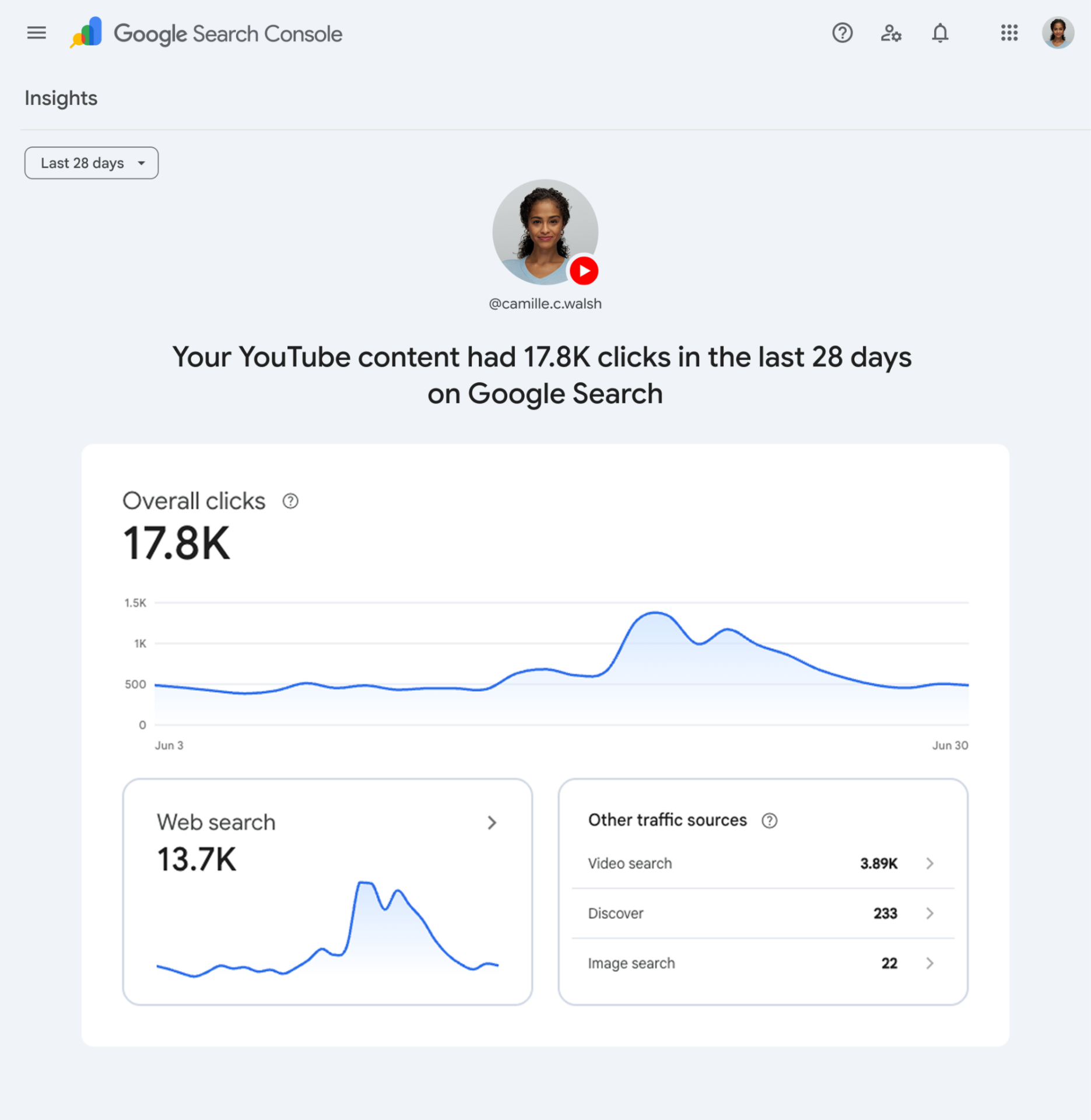
Google Search Console has added platform tracking for Instagram, TikTok, X, and YouTube — meaning you can now see how your social content performs in Google Search and Discover, not just your website. This matters because it confirms something a lot of businesses suspected but couldn’t verify: social posts genuinely show up in Google Search, and now there’s a way to measure it.
In practice, this looks like a dedicated Insights view showing clicks and impressions broken down by platform. A business that’s been posting consistently on Instagram or YouTube can now see, in real numbers, how much of that content is being surfaced to people searching on Google — often a meaningful share of total clicks.
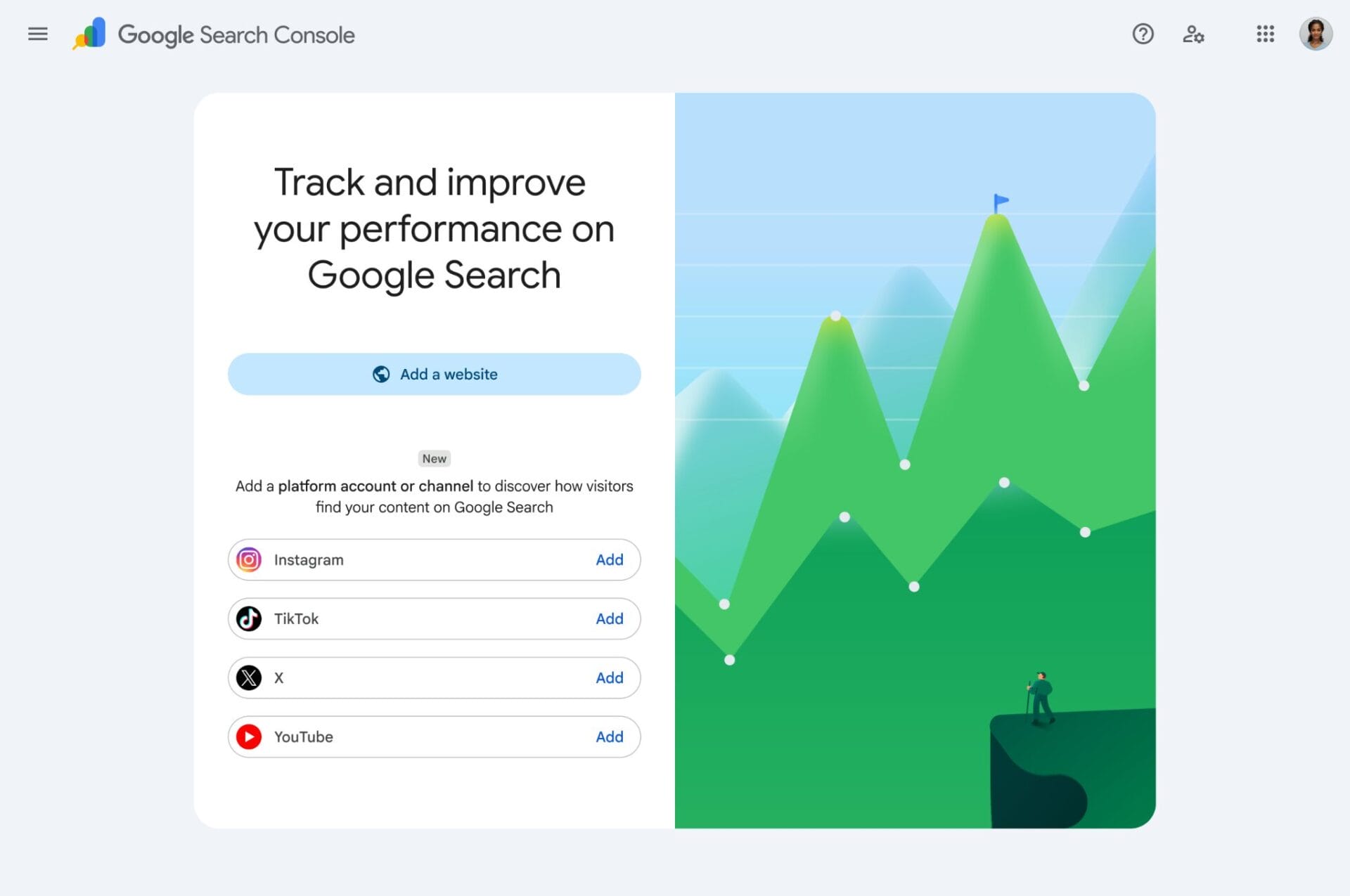
Setting it up is simple: add your platform accounts directly inside Search Console, and Google starts attributing search performance to that content going forward.
The practical takeaway: if your business has been treating social media and search as two separate efforts, this is a reason to stop. Content posted on social platforms is doing search visibility work whether you’re tracking it or not — now you can actually see the return.
Google’s AI Is Now Calling Businesses — And You Can See What It Collected
Separately, Google has confirmed that AI-powered phone calls are being used to verify and update business information — things like parking availability, curbside pickup, and current hours — directly with businesses. It’s a way for Google to keep listings accurate without waiting on business owners to update their profiles manually.
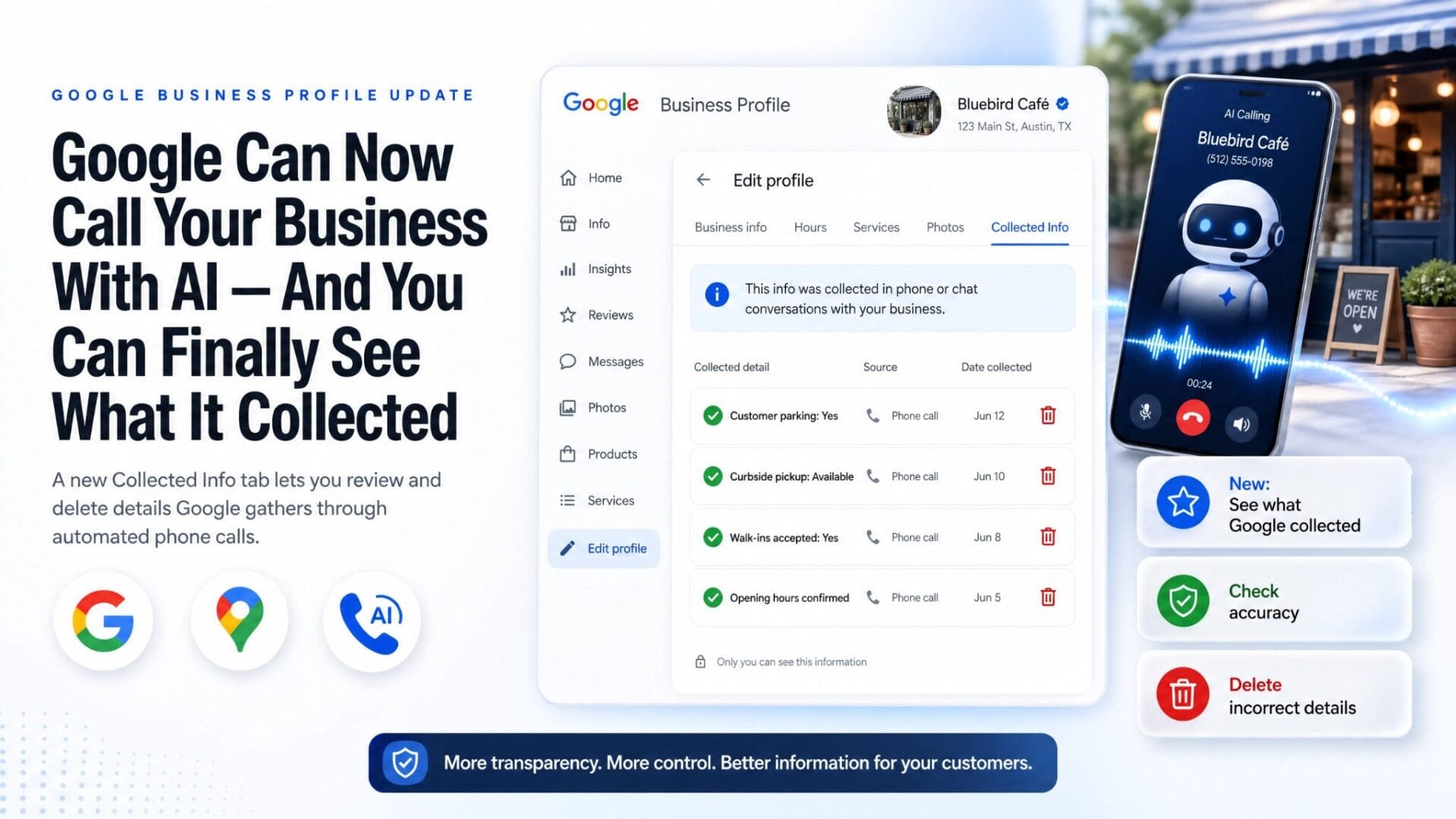
The part worth paying attention to is the transparency side of this. A new “Collected Info” tab inside your Google Business Profile lets you review everything gathered this way — what was collected, when, and through which conversation — and delete anything that’s inaccurate. Google is framing it as more transparency and more control, but the responsibility still falls on business owners to actually check that tab periodically, since incorrect information collected this way can end up shaping how AI assistants describe your business.
The Common Thread
Both updates point to the same shift: Google is pulling business information from more sources than ever — your website, your social accounts, and now direct conversations — and using it to answer questions on your behalf, whether that’s a search result or an AI-generated recommendation. The businesses that come out ahead are the ones actively managing what’s being collected, rather than finding out after the fact.
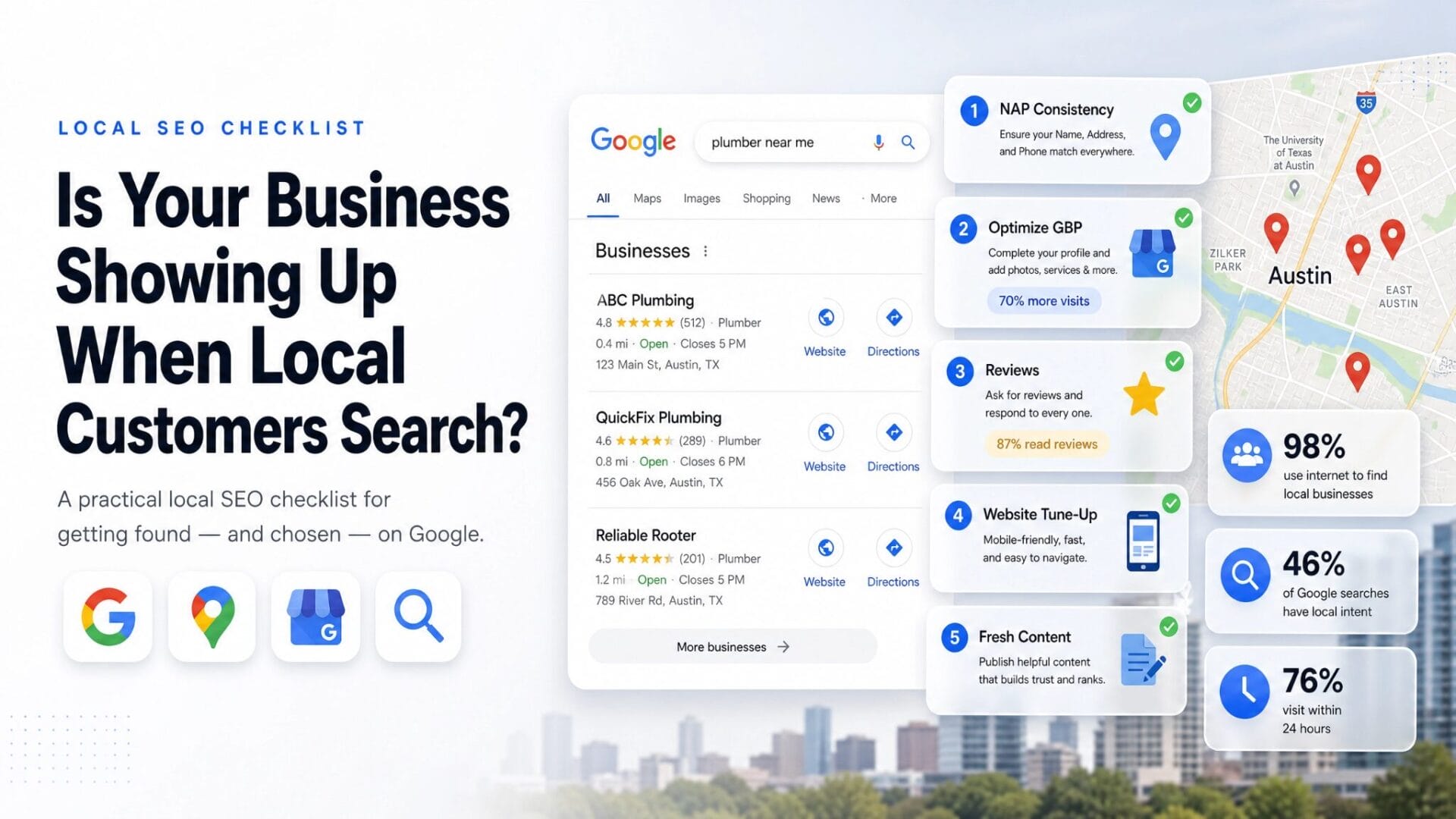
For the bigger picture on how all of this ties into whether AI assistants recommend your business at all, see what actually gets a local business cited by AI.


